Reimagining Transportation for a Lower-Carbon Supply Chain
Reducing emissions across the food and agriculture value chain requires innovation at every stage of transportation. From moving crops by inland barges and ocean vessels to delivering ingredients directly to customers, ADM is exploring and scaling practical low-carbon logistics solutions that help reduce emissions while maintaining reliability and efficiency.
Through investments in solar-powered shipping, marine biofuels and electric freight transportation, ADM is advancing its decarbonization efforts, a key pillar of its growth strategy, while helping build a more sustainable transportation network across its supply chains.
Harnessing Solar Power on Inland Waterways
One example is Helios, a cargo vessel operated by HGK Shipping for ADM that helps transport rapeseed across Europe's inland waterways.
Equipped with more than 300 solar panels, the vessel was recognized by Guinness World Records for featuring the world's largest solar module structure installed on an inland waterway vessel. The solar installation can generate approximately 90 megawatt-hours of electricity annually and is expected to reduce carbon dioxide emissions by up to 90 tons per year.
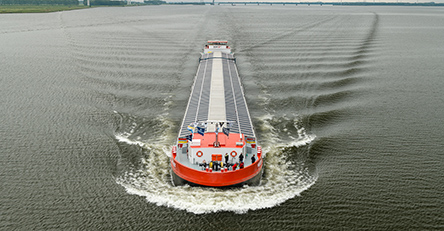
Beyond renewable power generation, Helios is equipped with a diesel-electric hybrid propulsion system and has been designed to be future-fuel-ready, enabling the potential adoption of alternative energy technologies such as hydrogen. Its low-water-optimized design and high cargo-carrying capacity also allow it to transport more cargo per voyage, particularly during periods of low water, helping reduce transport-related emissions and improve supply chain resilience.
By combining renewable energy, innovative vessel design and operational efficiency, Helios demonstrates how new technologies can be integrated into commercial freight operations today, supporting low-emission freight operations for customers, while advancing ADM's longer-term decarbonization objectives.
Exploring the Potential of Marine Biofuels
ADM is also evaluating how lower-carbon fuels can support the decarbonization of ocean shipping. In 2026, the company successfully completed its first global B100 marine biofuel trial aboard the vessel MV Harvest Rain. Conducted off the coast of Brazil, the five-day trial tested the use of 100% biofuel in real-world operating conditions, including fuel storage, purification, engine performance and vessel operations.
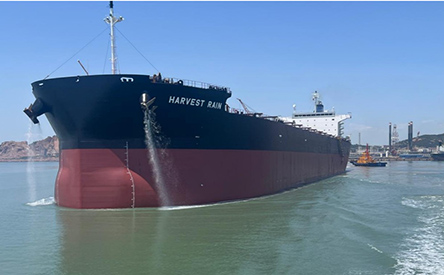
Approximately 107 metric tons of B100 marine biofuel, produced primarily from waste-based feedstocks, were consumed during the trial, generating valuable operational data and insights to help evaluate the feasibility and emissions-reduction potential of biofuels in marine transportation.
As a critical component of ADM's global supply chain, maritime logistics represents an important opportunity to explore technologies and fuels that can support the company's long-term decarbonization ambitions.
Electrifying Road Transport
On land, ADM is working to reduce transportation emissions through the deployment of electric heavy-duty vehicles. In the United Kingdom, ADM expanded its partnership with Voltloader to introduce electric vehicles for direct flour deliveries from ADM's milling facility in Corby, Northamptonshire, to its bakery customers.
The initiative builds on a successful earlier program that used electric vehicles to transport wheat from farms to ADM milling locations.
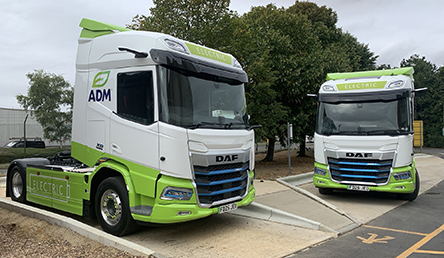
The electric vehicle units produce zero tailpipe emissions during operation. By extending electric transport from inbound ingredient logistics to outbound customer deliveries, ADM is demonstrating how emissions reductions can be achieved across multiple stages of the value chain while continuing to provide reliable service to customers.
ADM is also advancing electric transport solutions elsewhere in Europe. In Hamburg, Germany, the transportation team recently deployed its first electric truck for refined rapeseed oil deliveries, demonstrating how electric vehicles can help reduce emissions in food-grade liquid transport while maintaining the safety, reliability and service levels customers expect.
A Portfolio of Solutions
There is no single pathway to lower-carbon logistics. Different transportation modes require different technologies, fuels and operating models. ADM's approach is focused on testing and implementing a portfolio of solutions that address emissions across inland waterways, ocean freight and road transportation.
From solar-powered vessels and biofuel-powered shipping to electric trucks, these initiatives illustrate how innovation can help address transportation-related emissions, while supporting a more efficient and resilient supply chain.
As ADM continues to work toward its decarbonization goals as a key pillar of its growth strategy, these projects provide valuable experience and insights that can help accelerate the transition to lower-carbon transportation throughout the food and agriculture value chain.